
The Role of a Broker In the Stock Market
Every time you buy or sell a stock, a broker makes it possible. Acting as the essential bridge between everyday investors and global financial exchanges, brokers execute your trades, safeguard your capital, and open the door to wealth-building opportunities in the US and Canadian markets.
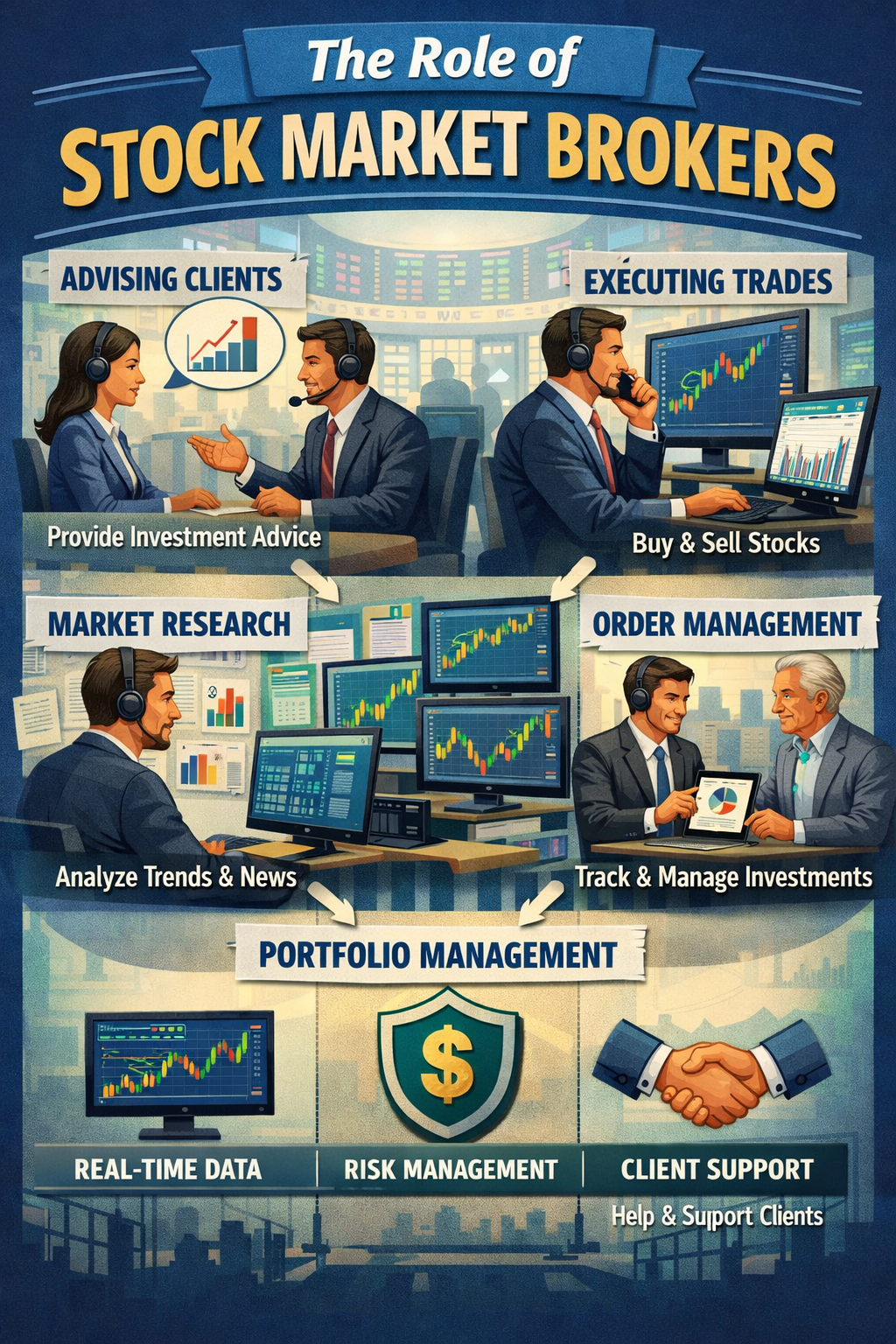
A stock market broker is a licensed professional or firm that acts as the essential intermediary between everyday investors and global financial exchanges. Without them, you cannot legally buy or sell publicly traded securities, making the selection of your broker one of the most important decisions in your financial journey.
The Gatekeepers of Wealth
For newcomers to Canada and beginning investors, the stock market can seem like an exclusive club. Brokers serve as your necessary gateway to this system by routing your purchase and sale orders to the appropriate exchange, where they are matched with other market participants. Beyond simply executing your trades, modern brokers provide the infrastructure to hold your purchased assets securely. In Canada, this means offering registered, tax-advantaged accounts like the Tax-Free Savings Account (TFSA), Registered Retirement Savings Plan (RRSP), and the First Home Savings Account (FHSA). They are the foundational platform upon which you will build your long-term wealth or execute your daily trading strategies.
Can You Bypass the Broker
Many investors wonder if they can bypass the broker entirely to avoid fees and interact directly with the companies they want to own. While it is technically possible through Direct Stock Purchase Plans (DSPPs) or Dividend Reinvestment Plans (DRIPs), it is exceptionally rare today. Some massive blue-chip companies allow you to visit their investor relations portals and fill out paperwork to buy shares directly through their transfer agents.
However, this method is highly inefficient for modern portfolios. You would have to open a separate, isolated account for every single company you wish to own, which destroys your ability to diversify easily. Direct purchases also suffer from painfully slow execution speeds, as companies pool investor money to buy shares on specific dates rather than executing your order instantly. Because modern discount brokers offer zero-commission trading and the ability to hold hundreds of assets in one centralized TFSA or RRSP, the DSPP route has become largely obsolete.
How Brokers Actually Make Money
With the rise of "free" trading apps, a common misconception is that brokerages provide their services out of goodwill. In reality, brokers are highly profitable institutions that monetize your account in several subtle ways. The traditional model relied heavily on trade commissions, where you paid a flat fee every time you clicked buy or sell.
While many brokers advertise zero commissions today, they offset this by profiting off your idle capital. Brokers routinely sweep the uninvested cash sitting in your account into deposit programs, paying you a tiny fraction of the interest while keeping the larger spread for themselves. If you decide to borrow money from the broker to amplify your purchasing power, they earn significant revenue from the margin interest they charge you. Zero-commission brokers also rely on trade routing arrangements, often receiving payment for order flow from market makers in exchange for routing your trades to their specific venues. Furthermore, brokers earn consistent revenue from the bid-ask spread, pocketing the tiny difference between the buying and selling prices on the market.
Exposing the Hidden Costs
The headline commission might be zero, but hidden fees can quietly erode your investment returns if you do not read the fine print. Administrative fees are the most common culprits. Many brokerages will quietly charge you an inactivity fee, often $50 or more per year if you fail to place a trade within a specific timeframe or drop below a minimum account balance. If you eventually decide to move your portfolio to a better competitor, your current broker will likely penalize you with a transfer fee (ACAT fee) that can easily exceed $100.
Trading itself carries invisible expenses, especially for Canadians. If you want to buy US stocks in your Canadian account, most brokers apply a hidden percentage markup on the currency conversion rate. Active traders also face "slippage," which occurs when a slow brokerage platform executes an order at a worse price than the trader intended. Finally, if you want access to professional-grade tools, real-time level 2 market data, or premium research reports, you will almost always have to pay a monthly subscription fee directly to the broker.
Impact on Your Trading Success
The broker you choose establishes the exact conditions under which you trade, meaning they directly influence whether you succeed or fail. Even the most refined trading strategy will crumble if your broker's infrastructure works against you. Execution speed is arguably the most critical factor for active day traders. If a broker's servers lag during the volatile morning market open, you will experience severe slippage, turning a perfectly timed entry into an immediate loss.
Trading costs also dictate your required win rate. Brokers that charge wide bid-ask spreads or hefty commissions force you to generate significantly higher profits just to break even. Additionally, infrastructure and platform capability give you an analytical edge. Brokers that offer seamless API integrations—allowing you to connect your account to advanced charting software like TradingView—enable you to build highly efficient, 15-minute daily screening routines. Conversely, less reputable brokers might employ business models that conflict with your success, sometimes taking the opposite side of your trades and profiting directly from your losses.
The Crucial Need for Regulation
Because you are handing over your hard-earned money, brokerages must be heavily regulated to protect your capital and ensure the integrity of the financial system. The most fundamental protection is the segregation of funds. Regulators mandate that brokers keep client money entirely separate from the firm's own operating capital. In Canada, these rules mean that if your broker goes bankrupt, your investments remain safe and legally yours.
Regulators also enforce strict competence and fairness standards. Brokers are bound by "know your client" (KYC) rules, ensuring they do not recommend dangerously complex or unsuitable products to inexperienced investors. They are also continuously monitored to prevent illegal practices like front-running, where a broker uses knowledge of your pending orders to trade for their own personal profit first. When brokers violate these rules, regulatory bodies have the power to levy massive fines or permanently ban them from the industry.
US vs Canadian Regulators
While the goal of investor protection is identical across North America, the regulatory structures of the US and Canada are fundamentally different. In the United States, regulation is heavily centralized at the federal level. The Securities and Exchange Commission (SEC) oversees the broad financial markets, while the Financial Industry Regulatory Authority (FINRA) directly polices the daily activities of US broker-dealers.
In contrast, Canada relies on a decentralized, provincial system. There is no single national securities regulator; instead, entities like the Ontario Securities Commission (OSC) govern their respective provinces, working together under the umbrella of the Canadian Securities Administrators (CSA). However, for brokerage firms specifically, the Canadian Investment Regulatory Organization (CIRO) acts as the national self-regulatory body, enforcing uniform trading rules across the country. Canada's banking system is highly centralized, with the Office of the Superintendent of Financial Institutions (OSFI) overseeing the commercial banks that often own the major investment brokerages.
Banks Acting as Brokers
You do not necessarily have to go to an independent firm to find a broker; major commercial banks frequently operate their own massive brokerage divisions. In Canada, the "Big Six" banks completely dominate the retail investing landscape, offering platforms like RBC Direct Investing and TD Direct Investing. While these brokerages are owned by the bank, they operate as legally distinct subsidiaries to comply with strict securities laws.
In the US, the Gramm-Leach-Bliley Act historically blurred the lines between commercial banking and investment banking. However, an American bank is only exempt from registering as a broker if it limits its activities to basic trust services or cash sweeps. If a US bank wants to offer retail stock trading, it must establish a separate, SEC-regulated broker-dealer arm. While bank-owned brokerages offer the convenience of keeping your checking accounts and investments under one roof, they are generally much more expensive than independent discount brokers.
The Trap of Offshore Brokers
In an attempt to escape strict North American regulations, some traders are lured by offshore brokers based in jurisdictions with notoriously loose oversight, such as Belize, Cyprus, or the Seychelles. These platforms aggressively market flashy features like 500:1 leverage, cash bonuses, and the ability to bypass restrictive Pattern Day Trading (PDT) rules.
Taking this route is a massive gamble. Offshore brokers do not provide the deposit insurance safety nets offered by Canadian and US regulators. They frequently mix client capital with their own business funds, meaning your money could vanish overnight if the firm faces financial trouble. Furthermore, if an offshore broker decides to freeze your account or block your withdrawals, you have virtually no legal recourse because enforcing domestic laws across international borders is practically impossible.
Scams and Unethical Practices
Even within regulated borders, the financial industry is not immune to bad actors. Recognizing the red flags can save you from devastating losses. Unethical licensed brokers sometimes engage in "churning," where they execute excessive, unnecessary trades in your account purely to harvest commissions for themselves. Others might push high-risk, illiquid investments that are entirely unsuitable for your goals because those products pay the broker a hidden kickback.
Outright criminal fraud is even more prevalent online. Scammers routinely build highly convincing, fake brokerage websites. They pose as investment managers, instructing you to deposit funds into these fake portals where the dashboard displays massive, rapid profits. When you attempt to withdraw your money, they hold it hostage, demanding exorbitant "exit taxes" before disappearing completely. Another classic scheme is the pump-and-dump, where fraudsters heavily promote a cheap stock online, wait for their followers to inflate the price, and then dump their own shares for a profit while the victims lose everything.
Real World Examples of Fraud
History is littered with cautionary tales of broker manipulation. In 2001, an Indian broker named Ketan Parekh orchestrated a massive circular trading scheme, borrowing heavily from banks to artificially rig the prices of specific stocks before dumping them onto unsuspecting retail investors. More recently, the Galleon Group insider trading scandal saw hedge fund manager Raj Rajaratnam generate over $60 million in illegal profits by using non-public information obtained from corporate insiders to execute trades before public announcements.
Modern scams rely heavily on digital deception. Fraudsters set up virtual "boiler rooms," posing as expert brokers on social media and aggressively cold-calling retail investors with high-pressure tactics. They promise guaranteed, risk-free returns using secret algorithms or insider knowledge. Remember the golden rule of finance: high returns always require high risk, and anyone promising you a guaranteed fortune is running a scam.
Verifying Brokers and Reporting Fraud
As an investor, your best defense is proactive verification. In Canada, you can instantly confirm a broker's legitimacy using the National Registration Search database provided by the CSA. This tool allows you to verify that the firm or individual is legally authorized to sell securities in your province. Additionally, you should consult the CIRO Dealer Directory to ensure the brokerage is a fully regulated member in good standing.
If you suspect you are dealing with a fake broker, immediate action is required. You must report the entity to the Canadian Anti-Fraud Centre (CAFC) and your provincial regulator, such as the OSC. If you have actually lost money or compromised your personal banking information, filing a formal police report is absolutely necessary. Reporting these crimes helps authorities issue public warnings and shut down fraudulent networks.
The Best Brokers in Canada
Broker selection depends heavily on the individual's investing style. For absolute beginners looking to build long-term wealth, discount platforms like Wealthsimple and Questrade are unmatched. Wealthsimple offers an incredibly easy-to-use mobile app with zero commissions on Canadian stocks, though their hidden currency conversion fees make them expensive for US trading. Questrade remains the top overall choice for DIY investors, allowing free ETF purchases and the crucial ability to hold US dollars directly in your registered accounts without forced conversions.
For advanced traders, Interactive Brokers Canada (IBKR) is the undisputed king. IBKR provides institutional-grade execution speed, utilizing proprietary routing technology to ensure your orders hit the market seamlessly. Because IBKR supports deep API integration, it is the perfect backend engine to pair with advanced front-end software like TradingView. While traditional bank brokerages like TD WebBroker offer excellent research tools, their $9.95 per-trade fees make them far too expensive for active, daily execution.
The Best Brokers in the US
The US brokerage market is vastly larger and highly competitive, resulting in incredible value for the consumer. Charles Schwab and Fidelity lead the pack as the best overall platforms. Both offer completely zero-commission trading and robust educational resources. Schwab is particularly powerful for technical traders due to its integration of the highly acclaimed Thinkorswim platform, while Fidelity offers unique, zero-expense-ratio mutual funds.
For active margin traders, Interactive Brokers operates a massive US footprint, offering the lowest margin borrowing rates in the industry. If you specialize in options trading, E*TRADE provides an exceptional platform filled with probability calculators and risk graphs. Niche platforms like TastyTrade have also emerged, built exclusively for active derivatives traders with a highly competitive, flat-fee pricing model.
The Retail Investor Revolution
The relationship between brokers and retail investors has fundamentally transformed over the last decade. In the past, high commission fees, expensive phone-based execution, and a severe lack of public market data created a massive barrier to entry. The advent of online, zero-commission trading platforms completely shattered these walls.
This evolution triggered an unprecedented surge in market participation. Millions of individuals opened brokerage accounts directly from their smartphones in a matter of minutes. Brokers democratized access to institutional-grade data, providing everyday people with the same level 2 market depth and charting tools used by Wall Street veterans. By 2021, retail investors accounted for an astonishing 25% of all daily equity trading volume, evolving into a collective force powerful enough to trigger historic short squeezes and upend traditional hedge funds.
The Rise of Robo-Advisors
While gamified apps empowered active traders, robo-advisors revolutionized the landscape for passive, long-term investors. Platforms like Wealthsimple Invest and Betterment play a crucial role in the retail boom by completely automating the complexities of wealth management.
Robo-advisors removed the intimidating financial hurdles that once kept newcomers out of the market. Instead of requiring a massive $100,000 minimum balance for a human advisor, these algorithms allow you to start investing with pocket change. By answering a few questions about your risk tolerance and timeline, the robo-advisor automatically builds a diversified ETF portfolio, manages asset rebalancing, and reinvests your dividends. For busy professionals or newcomers to Canada who want to grow their TFSA without the stress of daily market analysis, robo-advisors offer an elegant, low-cost solution.
The world of stock market brokers is vast, but it does not have to be intimidating. By understanding how these platforms operate, identifying their hidden fees, and recognizing the red flags of fraud, you can confidently select the right broker to support your financial goals.